 ACROPORA COLLECTION- CUT TO ORDER
 ACROPORA FRAGS
Reef Insights
Lighting for corals: thoughts on spectrum, PAR, and the best setup for Acropora
Jan
Many thanks to Eddie McKnight for putting in the hours to create this and generously sharing it with the reefing community. Eddie did all the work behind the research and ideas in this article, and it’s extremely kind of him to let other reefers benefit from it.
Lighting for corals: thoughts on spectrum, PAR, and the best setup for Acropora
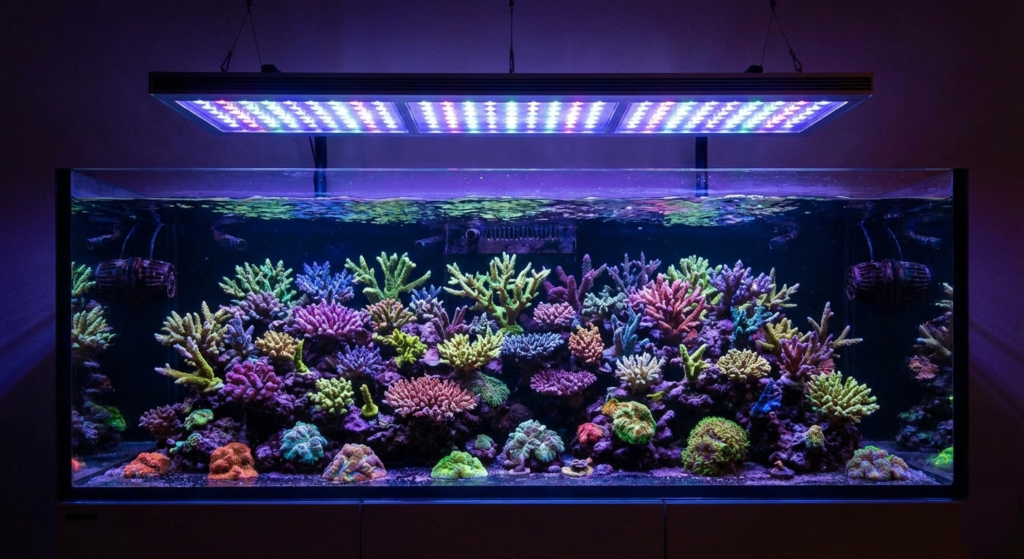
When it comes to lighting for coral, most reefers quickly learn one thing: it’s not just about making the tank look nice. Lighting directly impacts coral growth, colour, health, and long-term stability. At the same time, it’s also one of the most confusing parts of reefing, because there are so many different lights, settings, and opinions.
This guide focuses mainly on lighting for coral growth with Acropora, because they are some of the most light-demanding corals we keep. Even then, different Acropora species can have very different needs, so it’s always about finding the right balance.
Also, it’s worth saying clearly- lighting is only one piece of the puzzle. Flow, nutrients, alkalinity stability, trace elements, and overall husbandry matter just as much. However, if we want consistent SPS success, we still need to get lighting for coral right.
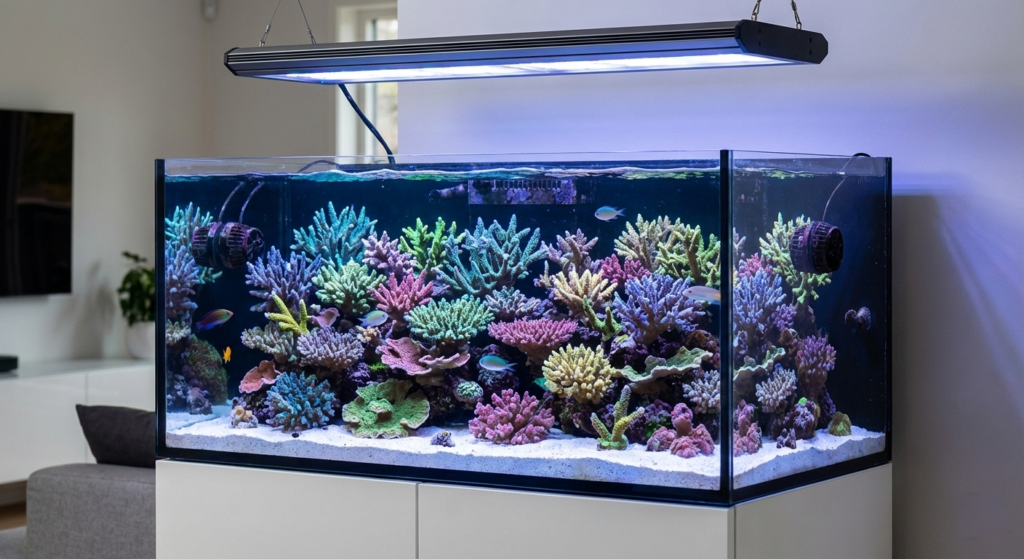
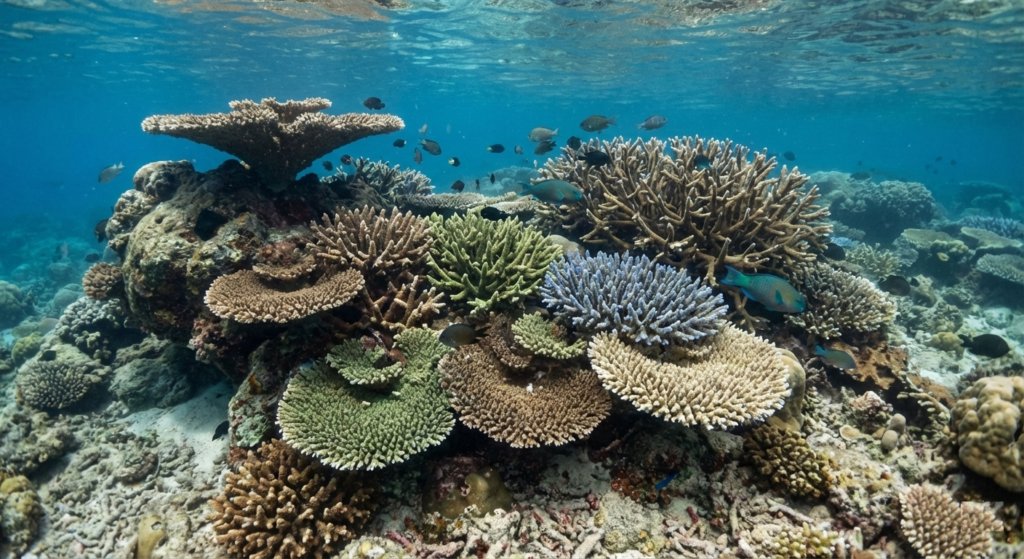
Lighting for coral starts with understanding where Acropora live in nature
To get better results with lighting for coral, it helps to look at where these animals come from.
Most Acropora species grow in shallow reef zones, often between 1 meter and 30 meters deep. Some can be found deeper (around 50m+), but the majority of the classic “high light SPS” species come from areas where sunlight is strong and water movement is intense.
That means two key things:
- Acropora rely heavily on light to fuel their symbiotic algae (zooxanthellae)
- They also need strong flow to bring in food and export waste
In a mixed reef tank, you will always have to compromise. You can’t create perfect conditions for every coral in one glass box. Still, with smart placement and good planning, you can create enough micro-zones to keep most corals happy.
Lighting for coral growth depends on spectrum, not just brightness
Corals don’t “use” light the same way we do. For coral growth, spectrum matters just as much as intensity.
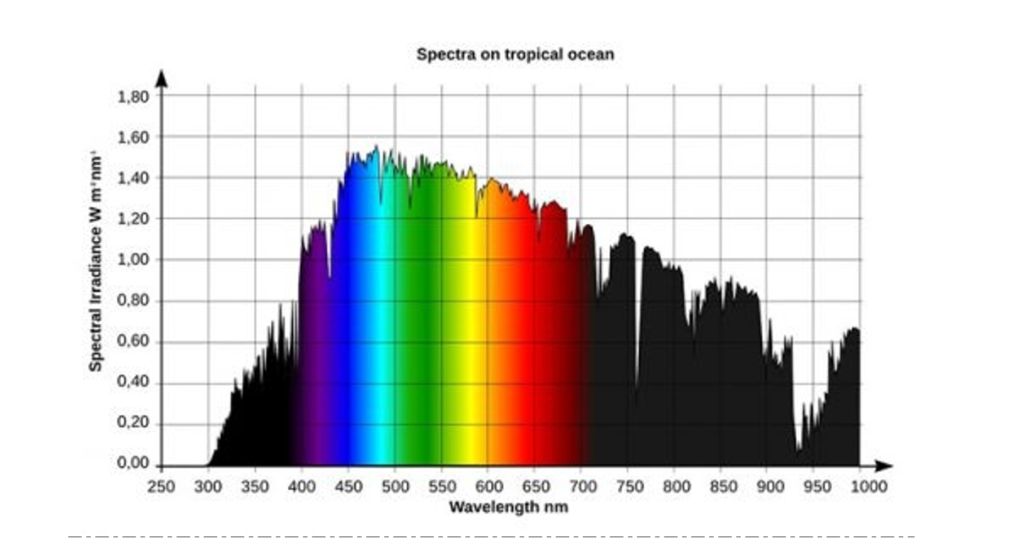
Natural sunlight contains the full rainbow of visible light, plus wavelengths we can’t see (like infrared and ultraviolet). However, as sunlight travels through water, certain colours drop off faster than others. For example, red light fades quickly with depth, while blue penetrates much deeper.
That’s why deeper reefs look so blue when you dive on them.
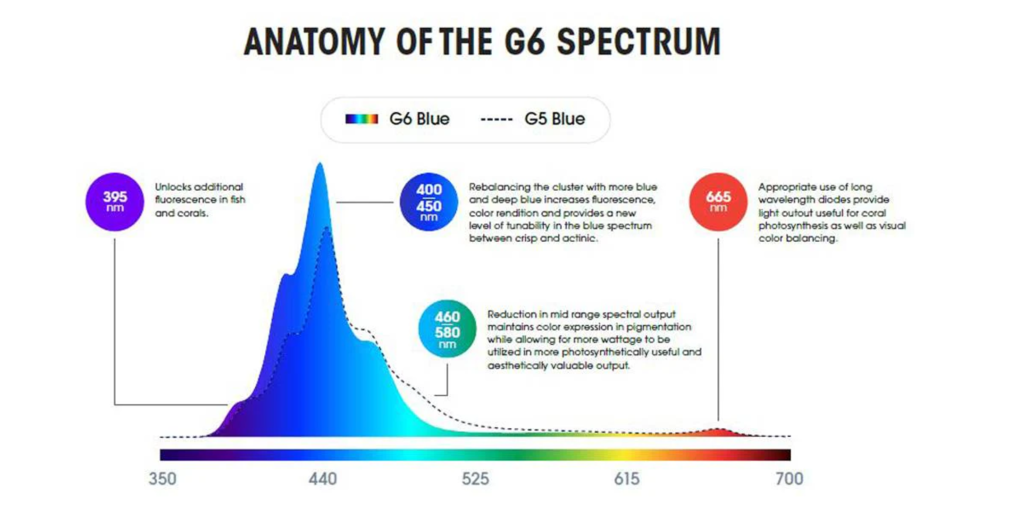
For lighting for coral, the most important range is the visible spectrum from roughly 400nm to 700nm. Corals may also absorb a little below that, around 380nm, which sits right near the UV edge.
Based on coral absorption and reef experience, a practical spectrum goal looks like this:
- Strong blue lighting (420–460nm) for deep penetration and coral growth
- Some violet (400–420nm) to boost fluorescence
- A controlled amount of red (~660nm) which may support growth and balance
The big takeaway is simple: if your spectrum is too narrow, you may still grow coral, but you might limit colour, balance, or long-term health.
Lighting for coral intensity: what PAR really means in reef tanks
Spectrum is important, but intensity is the other half of lighting for coral success. That’s where PAR comes in.
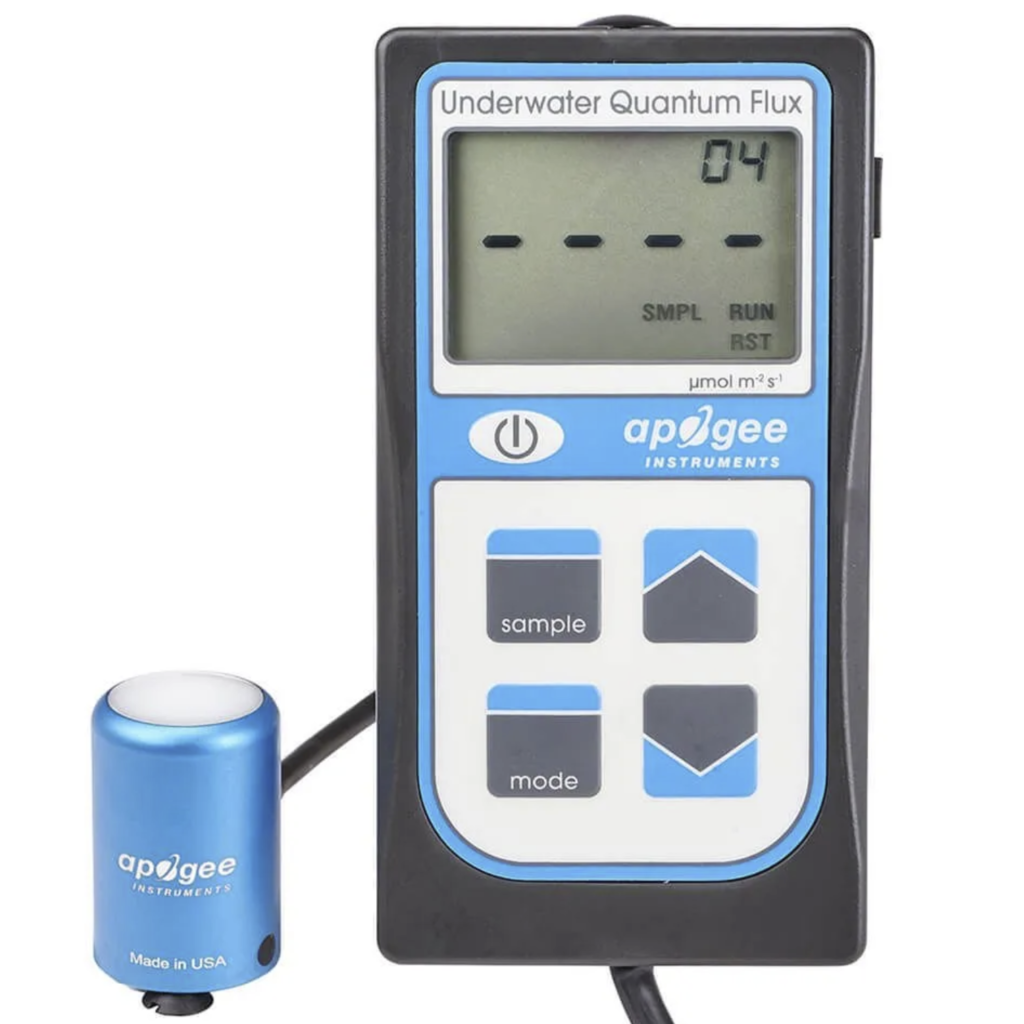
PAR stands for Photosynthetically Active Radiation, which measures light in the 400–700nm range. Most reefers use PAR meters to estimate how much usable light reaches different parts of the tank.
One thing many hobbyists miss is that a PAR reading doesn’t guarantee the coral can use all of it equally. Some wavelengths contribute more to coral photosynthesis than others. Still, in real-world reefing, PAR remains one of the best practical tools we have.
A good target for Acropora is often:
- 300–350 PAR for general SPS growth
- 350–450 PAR for high-light Acropora species
- Some corals can tolerate up to 600 PAR, but that’s not always necessary
That said, more PAR is not automatically better. Too much light can cause stress, bleaching, or slow decline if the rest of the system can’t keep up.
Lighting for coral acclimation: how to avoid bleaching and stress
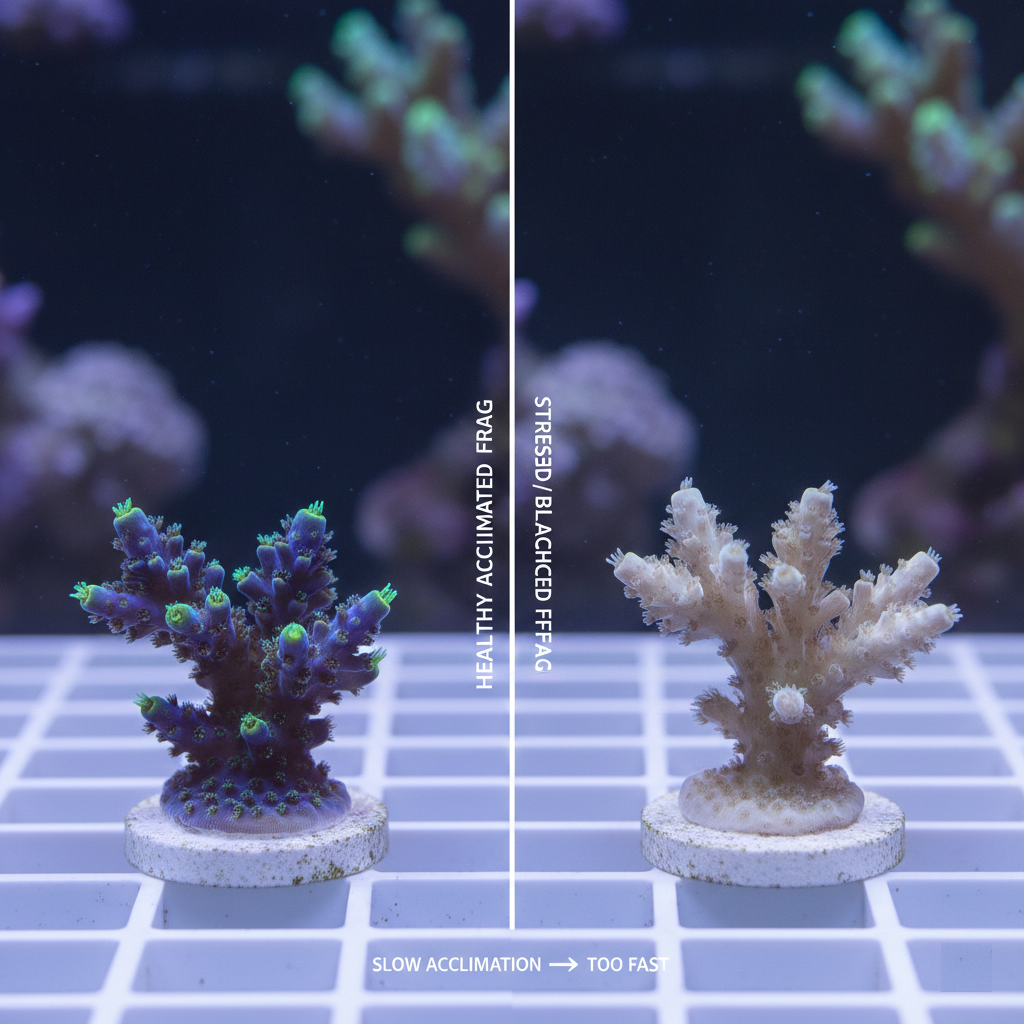
One of the biggest mistakes with lighting for coral is changing intensity too quickly.
Corals need time to adjust. If you increase light too fast, you can cause bleaching, tissue loss, or long-term stress that shows up weeks later.
A safe approach looks like this:
- Start at the lower end of the coral’s PAR range
- Increase slowly over days or weeks
- Watch coral response closely (polyp extension, colour, growth tips)
This matters even more with fresh frags. Fragging causes tissue damage, and that temporarily reduces the coral’s ability to regulate its symbiotic algae. If you blast a new frag with high PAR, the coral may not handle the metabolic demand.
A practical frag method for Acropora:
- Start frags around 50–100 PAR
- Let them stabilize for around 2 weeks
- Increase intensity by 10–20% per week
Also, keep in mind: higher PAR increases the coral’s demand for strong flow and excellent water quality. If nutrients swing or flow is weak, high light can push corals into trouble faster.
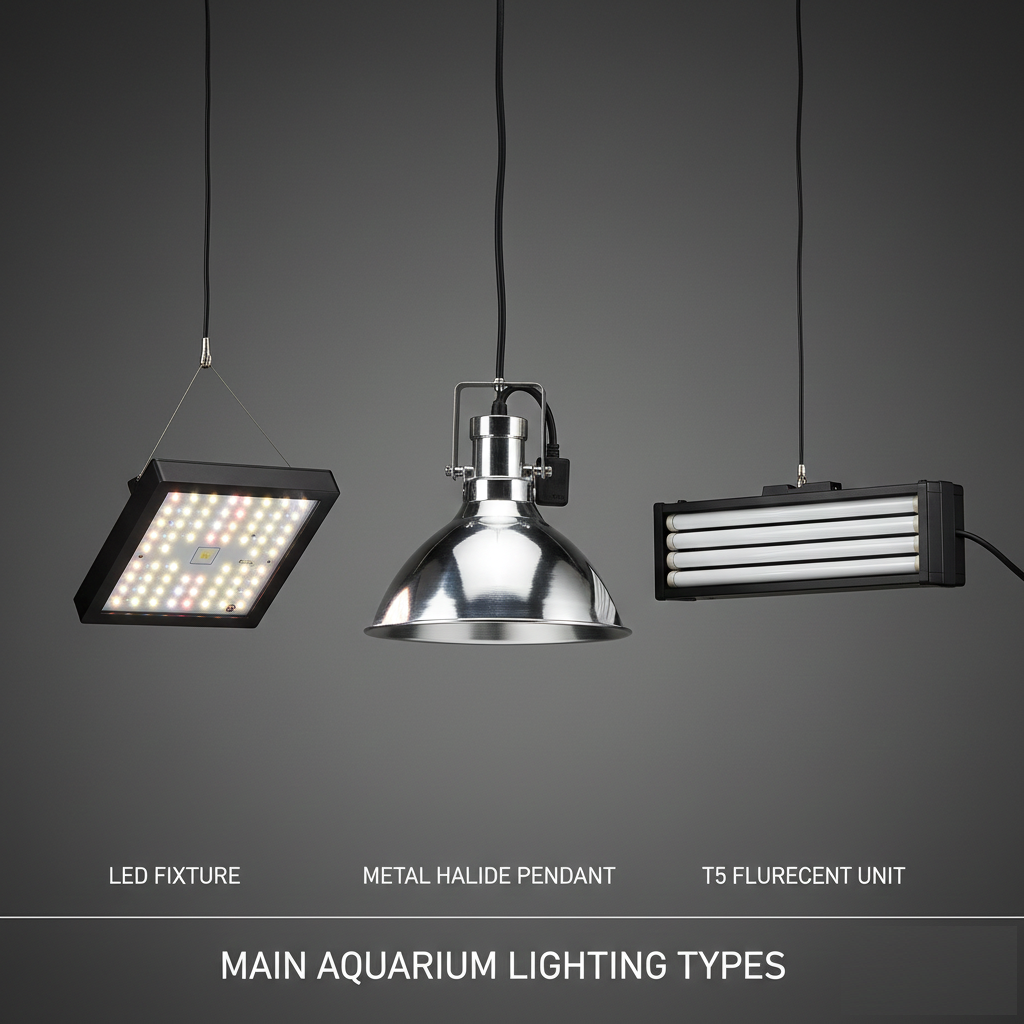
Lighting for coral options: metal halide, LEDs, and T5 explained
The good news is that modern reefers have more choices than ever. The challenge is picking what fits your goals, budget, and tank style.
The main lighting options for lighting for coral include:
- Metal halide
- LEDs
- T5 fluorescents
- Hybrid combinations (LED + T5 or LED + tubes)
As corals grow, your lighting needs can change too. Bigger colonies create shading, and what worked for frags may not work later. That’s why many reefers add supplemental bars or change fixtures over time.
Lighting for coral with metal halides: why SPS growers still love them
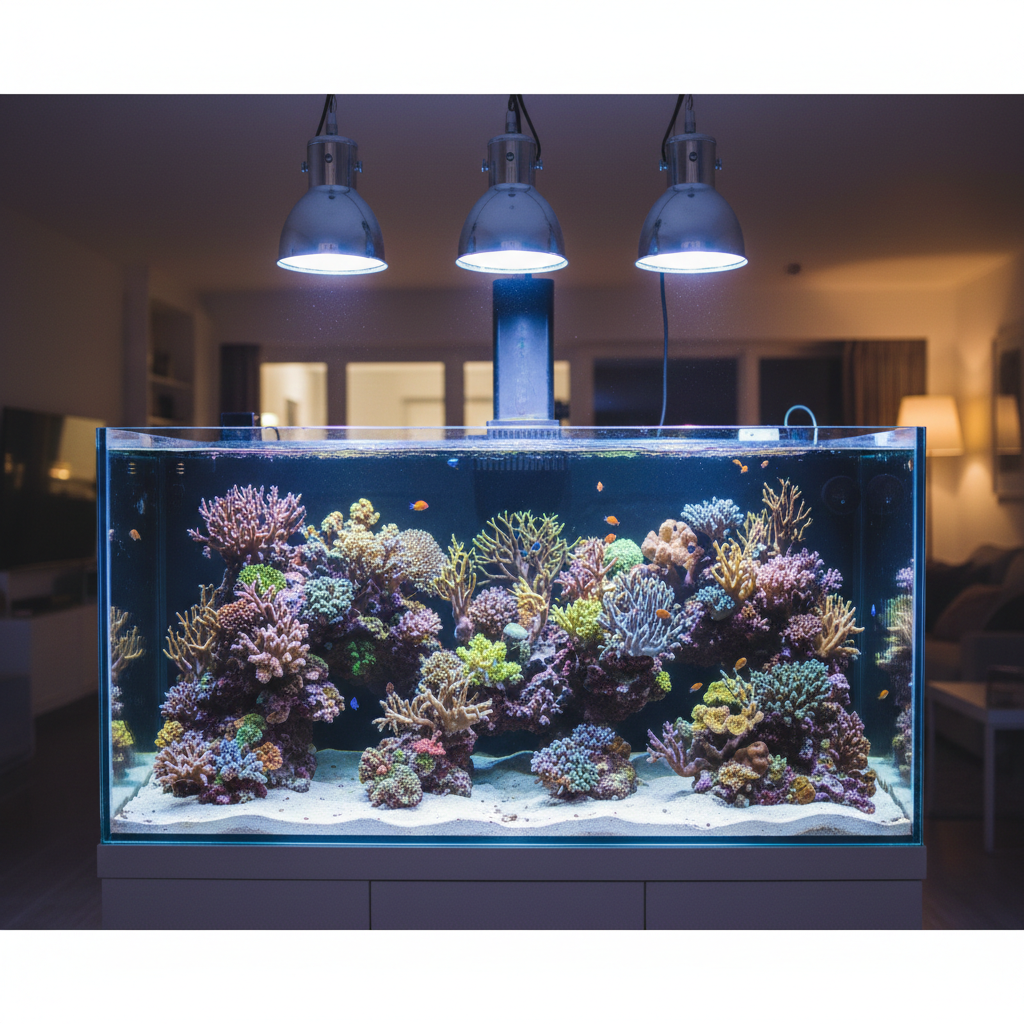
Many reefers (including Eddie) believe metal halides grow corals extremely well, possibly better than anything else.
The biggest strength of halides is the broad, continuous spectrum. Metal halide lighting often covers roughly 380–700nm, with some near-UV and infrared included. That “sun-like” spectrum is something many LEDs still try to imitate.
However, halides come with real downsides:
- High power use (often 250–400W per unit)
- Bulbs need replacing every 6–12 months
- Bulb output shifts over time (blue output often drops first)
- Heat and running costs can be significant
- Long-term availability may become an issue
Metal halides are often sold by Kelvin rating, which changes the look and spectral balance:
- 6,500K: strong red/green/blue, similar to noon sunlight
- 10,000K: balanced white with strong blue
- 20,000K: heavy blue/actinic look, often lower overall PAR
Some coral farms now run halides with LEDs together, which can be an incredible combination. For home hobbyists, it may not always be practical, but it’s worth mentioning because the results can be outstanding.
Lighting for coral with LEDs: control, efficiency, and spectrum choices
LEDs are now the most popular option for lighting for coral, mainly because they are efficient, adjustable, and easy to run.
Unlike halides, LEDs don’t produce a smooth spectrum curve. Instead, they create sharp peaks at specific wavelengths. That gives you control, but it also means the light is less “natural” unless the fixture blends channels very well.
Modern LED systems usually mix cool white, warm white, royal blue, blue, violet, UV, red, and green to build a balanced output. Many manufacturers have worked hard to match the overall look and performance of natural sunlight.
A key question Eddie raises is this:
If manufacturers already limit red LEDs to match sunlight balance, why do reefers often reduce reds even more in their custom programs?
After all, Acropora often live in shallow water where they still receive red light as part of natural sunlight.
There’s no single perfect answer in reefing, but it’s a smart point to think about when tuning lighting for coral growth vs appearance.
Lighting for coral LED schedule: a simple setup that supports growth
If you run LEDs as your main lighting for coral solution, Eddie suggests a very practical strategy:
- Run all colour channels at 100% for 4–6 hours per day
- Keep a total photoperiod of 10–12 hours
- Use a 30–60 minute ramp up, then a similar ramp down
Why does this help?
A faster ramp-up encourages photosynthesis earlier in the day, which can raise pH. Higher pH supports calcification, meaning corals can build skeleton faster.
After the “full sunlight” block, you can reduce red/green channels and shift bluer for the rest of the day. That way you get the viewing colour you like, without starving corals of a more complete spectrum.
In other words: choose the look you enjoy, but still give corals a real “sunlight window.”
One more important point: too much light is often the real problem. Light penetration is usually not difficult with modern LEDs.
For example, using an Apogee meter, Eddie reports:
- Around 200 PAR at the bottom of an 80cm deep tank at only 60% intensity
- Up to 600 PAR at the surface at 75% intensity
So if your corals struggle, don’t assume you need more power. Sometimes you need less intensity and more stability.
Lighting for coral with T5: proven results and great coverage
T5 lighting has a loyal following in SPS reefing, and for good reason. It delivers very even coverage and reduces harsh shadows, which helps coral colonies grow more uniformly.
T5 fixtures also allow bulb mixing, so you can tune spectrum by choosing different tubes.
The main downsides:
- Bulbs need replacement every 12–18 months
- Running costs are higher than LEDs
- Heat and fixture size can be a factor
Many reefers love hybrid setups (LED + T5) because they combine LED control with T5 coverage. That can be a strong option for anyone serious about lighting for coral long term.
Lighting for coral summary: what matters most for long-term success
With modern equipment, reefers have many great choices for lighting for coral. If you follow manufacturer coverage guidelines and avoid rushing changes, you can get excellent results with most reputable lights.
To keep it simple:
- Focus on strong blues, some violet, and don’t fear a balanced spectrum
- Aim for stable PAR in the correct range for your corals
- Increase intensity slowly and give frags time to adapt
- Remember that higher PAR demands better flow and water quality
- Watch your corals closely, because they will tell you what works
In the end, success comes from stability, consistency, and small adjustments over time.
The ReefBuilders discuss this topic further in the article below:
https://reefbuilders.com/2017/09/15/the-reef-builders-community-reef-lighting-program/
Check out our product line: ACROKINGDOM Fundamental Care
Check out our ACROPORA COLLECTION- CUT TO ORDER
